Learn Shogi Moves: 8 Piece Types and Basic Rules for Beginners
Published

When starting Shogi, first learn how the Shogi pieces move. The board has 81 squares in a 9x9 grid, and you win by trapping the opponent's king into checkmate.
Core Objective of Shogi and Overview of 8 Piece Moves
Figure 1 as text
Gote: none
Gote in hand: none
Sente: 5e rook, 8i lance
Sente in hand: none
To move: Sente
Arrows: 5e→1e, 5e→5a, 5e→5i, 5e→9e, 8i→8a
SFEN: 9/9/9/9/4R4/9/9/9/1L7 b - 1
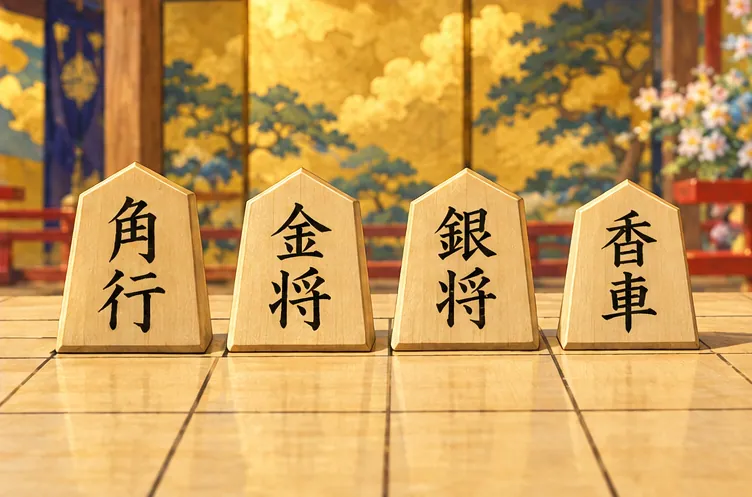
There are 8 piece types. The diagram shows the rook at 5e moving orthogonally and the lance at 8i moving straight forward. The king moves 1 square in any direction. The major pieces reach far: the rook orthogonally, the bishop diagonally. The gold general and silver general push forward or guard, while the knight leaps over pieces diagonally forward. The lance moves straight ahead, and the pawn steps forward 1 square. Play by testing each unique trait.
Figure 2 as text
Gote: none
Gote in hand: none
Sente: 6d bishop, 3h pawn, 2h pawn, 1h pawn, 2i knight
Sente in hand: none
To move: Sente
Highlighted squares: 1g 3g
Arrows: 6d→3a, 6d→3g, 6d→9a, 6d→9g
SFEN: 9/9/9/3B5/9/9/9/6PPP/7N1 b - 1
This diagram shows the bishop at 6d moving any distance diagonally, and the knight at 2i leaping over a pawn at 2h to land on 1g or 3g. Grasp the difference between long diagonal lines and jumping influence.
Using Captured Pieces and Upgrading via Promotion
A key appeal of Shogi is reusing captured pieces as pieces in hand. You can drop them on any open square on your turn, greatly expanding your tactical choices.
Entering the opponent's 3 ranks lets you promote pieces. They gain power, moving like a gold general or as upgraded major pieces.
- Perks: Silver, knight, lance, and pawn move like a gold general, while rook and bishop gain close-range moves.
- Choice: Promotion is optional on valid moves. Leaving silver or knight unpromoted keeps useful movements.
Figure 3 as text
Gote: none
Gote in hand: none
Sente: 2c dragon, 5e horse
Sente in hand: none
To move: Sente
Highlighted squares: 1b 1c 1d 3b 3d 4e 5d 5f 6e
Arrows: 2c→2a, 2c→2i, 2c→9c, 5e→1a, 5e→1i, 5e→9a, 5e→9i
SFEN: 9/9/7+R1/9/4+B4/9/9/9/9 b - 1
This diagram shows the dragon at 2c adding 1 diagonal square to the rook's reach, and the horse at 5e adding 1 orthogonal square to the bishop's reach. Promoting leaves fewer blind spots and improves front-line mobility.
Play in the app
The fastest way to understand concepts is by playing them on the board. Test your skills against an on-device AI that lets you complete full games even without an internet connection.


Essential Illegal Moves Beginners Must Keep in Mind
Shogi has basic fouls to avoid. You cannot place two unpromoted pawns on the same file (Two Pawns (nifu)), nor drop or move a piece to leave it as a piece with no moves.
Drop pawn mate is also a loss by illegal move. Advancing a board pawn to mate is fine.
Reaching the same board state 4 times causes sennichite (draw), but perpetual check results in a loss by illegal move for the checker.
Practice Piece Moves in an App to Steadily Improve
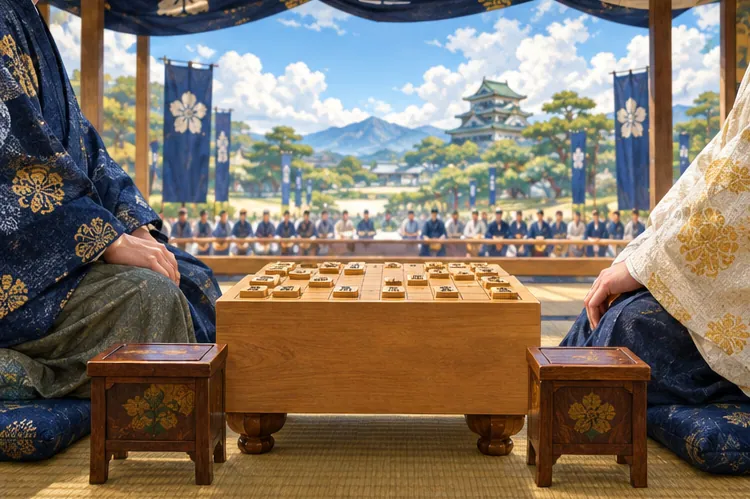
After learning piece moves, practice in an app. On-device AI allows full matches offline, giving you all the time you need to think.
If you hesitate, taking back a move (up to 3 times per game) helps you learn. Replaying the game record from move 1 deepens your grasp of piece influence. Check your dan and kyu ranks to track progress.
Frequently asked questions
How does a tokin, a promoted pawn, move?
It moves like a gold general: 1 square forward, diagonally forward, sideways, or back (6 directions in total), becoming a handy, flexible piece.
Is there any piece that can leap over other pieces?
Only the knight jumps over pieces. It leaps 2 squares forward and diagonally, bypassing any pieces in between.
If a promoted piece is captured, does the opponent keep it promoted?
No, it returns unpromoted. Captured pieces revert to their base form in the capturer's pieces in hand, dropping unpromoted onto the board.
What happens if an illegal move like Two Pawns (nifu) is played?
Playing an illegal move ends the game in an immediate loss. Two Pawns (nifu), drop pawn mate, making a piece with no moves, and perpetual check all result in a loss by illegal move.
Play in the app
Become a mechanical daimyo and battle through 50 Sengoku court matches in the Shogi app Shogi: The Grand Court. Free to play with optional in-app purchases.